Speed to Lead
How to Improve Contact Center & BDC Connect Rates With AI Texting
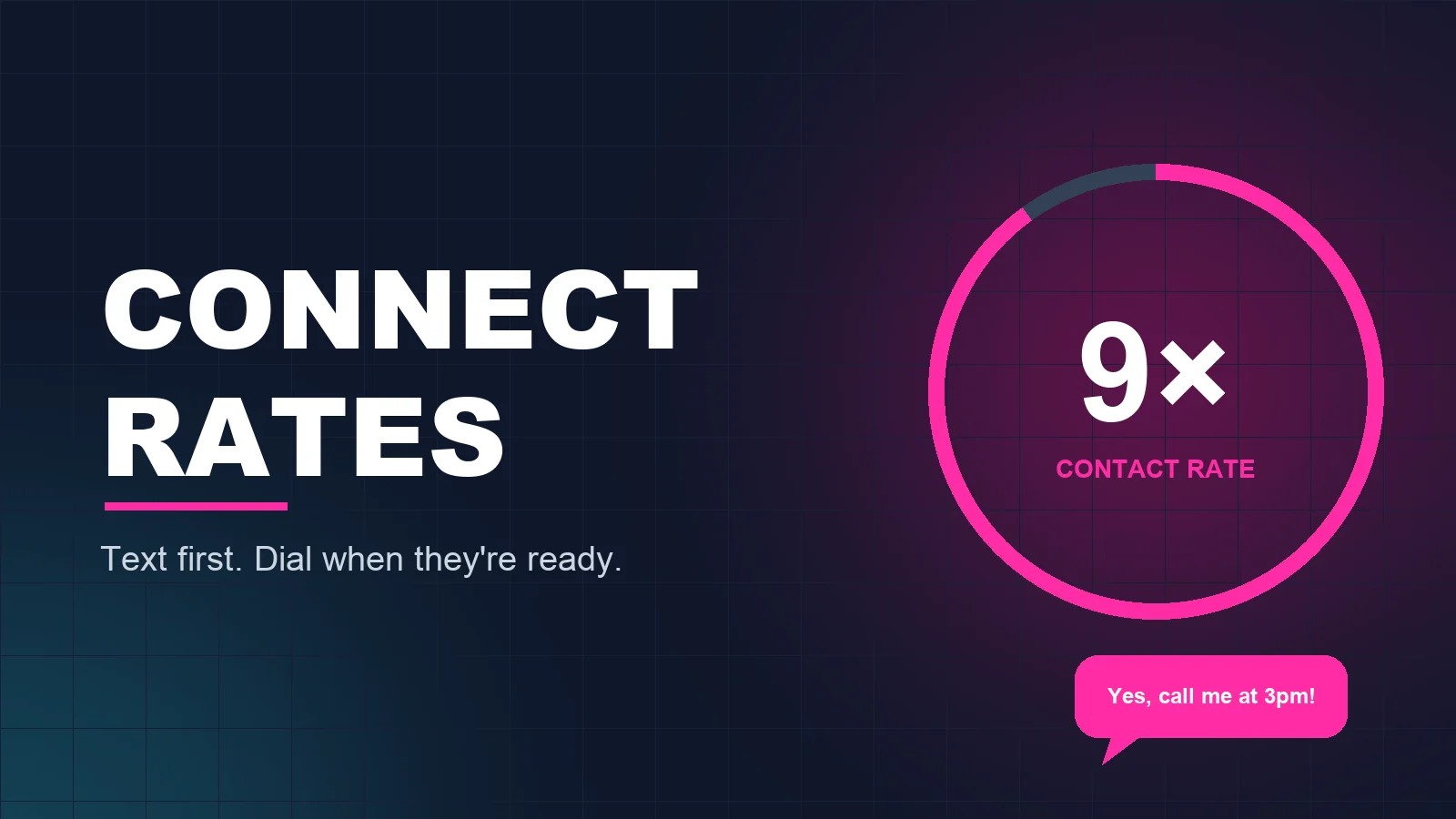
How to Improve Contact Center & BDC Connect Rates With AI Texting
Your agents are dialing more than ever and connecting less. That is not a training problem. Only 19% of people answer calls from unknown numbers, so every extra dial buys a little less.
This guide is for contact center leaders and BDC managers who are measured on connects, appointments, and cost. It covers what connect rate really measures, why it keeps falling, and how a text-first approach lifts contact center connect rates without adding agents or dials.
What Is a Connect Rate?
Connect rate is the share of attempts that reach a live person. Contact centers usually measure it two ways:
- Per dial: live connects ÷ total dials. This tells you how efficient your dialing is.
- Per lead (contact rate): leads reached at least once ÷ total leads. This tells you how much of the pipeline you actually talk to.
Both matter, but the per-lead number is the one tied to revenue. A team can improve its per-dial rate by dialing less and still leave most leads untouched.
Why Connect Rates Keep Falling
People screen unknown numbers
Only 19% answer calls from numbers they do not recognize. That includes leads who asked to be contacted.
Heavy dialing gets numbers flagged
High-volume outbound numbers are more likely to be labeled as spam by carriers and phones. Once labeled, even good calls go unanswered.
Leads age while they wait in queue
When volume spikes, leads sit in the dialer queue. Every minute lowers the odds of reaching them. The first business to respond wins 78% of the time.
Agents give up early
80% of sales need five or more follow-ups, but most agents stop after two. Leads who would have connected on attempt four never get attempt four.
Why More Dials Will Not Fix It
The instinct is to add power dialers, more attempts, and more agents. The problem is that each extra dial goes into the same wall: people who do not answer unknown numbers. You pay for the minutes, burn out agents, and risk getting your numbers flagged, all for a small bump in connects.
The bigger lever is changing how you reach people, not how often you dial them.
How to Improve Connect Rates: 7 Tactics
1. Text before you dial
Send a short, personal text the moment a lead arrives: who you are, why you are reaching out, and one easy question. 60% of leads prefer SMS as the first touch. A reply turns your next call from a cold dial into an expected one.
2. Respond in seconds
Teams that respond in under five minutes see up to a 9× higher contact rate. Automation lets the first touch go out instantly, even when every agent is busy. See our speed to lead guide for the full framework.
3. Let the lead choose the time
Ask "When is a good time for a quick call?" and book it. A scheduled call has a far better chance of being answered than a surprise one.
4. Connect hot leads live
When a lead says "call me now," bridge them to an available agent within seconds. That is a connect at the moment of peak intent. More in our guide to live call transfer.
5. Protect your caller reputation
Fewer blind dials means fewer chances to be flagged as spam. Register your numbers properly, keep calling practices clean, and let text replies decide who gets a call.
6. Follow up across channels
Build a cadence that mixes SMS, calls, voicemail, and callback links, and keep it going for five or more touches. Stop immediately when the lead replies, books, or opts out. See How to Improve Lead Follow-Up Time.
7. Route by readiness
Put leads who have replied, asked for a call, or booked a time at the front of the queue. Agents should spend their time on people who want to talk, not on dialing through a cold list.
A Sample Text-First Sequence for a BDC
Here is how a text-first flow looks in practice for a new inbound lead:
- Second 0: Lead submits a form. A personal text goes out immediately, referencing their request and asking one question.
- Minutes later: The lead replies. The conversation answers their questions and confirms the basics.
- Lead is ready: They choose "call me now" (bridged live to an available agent) or pick a time (booked on the agent's calendar).
- No reply: A short follow-up text a few hours later, then a call attempt on day one or two with a voicemail and a text so they can respond easily.
- Still quiet: More touches through the first week, then a slower nurture rhythm until they respond, book, or opt out.
Agents only enter the flow when there is a real person ready to talk. Everything before that runs on its own.
Dial-First vs. Text-First Contact Center
| Dial-first | Text-first | |
|---|---|---|
| First touch | Unexpected call (19% answer) | Personal text in seconds (60% prefer SMS) |
| What agents do all day | Dial, leave voicemails, redial | Call leads who replied or booked |
| When the call happens | Whenever the dialer reaches them | When the lead is ready |
| Spam-flag risk | Higher: lots of blind dials | Lower: fewer, expected calls |
| Follow-up | Usually stops after 2 attempts | 5+ touches across channels |
| Handling spikes | Leads wait in queue | Every lead gets a response instantly |
Metrics BDC and Contact Center Leaders Should Track
- Contact rate per lead, not just connects per dial
- Median time to first touch, by source and hour
- Reply rate to the first text
- Connects from scheduled calls vs. blind dials
- Appointments set per 100 leads
- Cost per appointment
- Opt-out rate, to keep outreach welcome
How Conversta Lifts Connect Rates
Conversta texts every lead within seconds, holds a real two-way conversation, and qualifies them before an agent picks up the phone. Ready leads are booked into a time slot or bridged straight to an available agent with Live Call Connection. Missed calls trigger voicemail, callback, and reschedule flows automatically.
Teams see up to a 9× contact rate and 2.4× more appointments. One direct-lending team moved from a 12% to 65% contact rate. Your agents spend 100% of their time on conversations, not on dialing.
Frequently Asked Questions
What is a good connect rate for a contact center?
It depends on your leads and industry, so benchmark against your own history. Track both connects per dial and contact rate per lead, and focus on raising the share of leads you actually reach.
How do you increase call connect rates?
Text before you dial, respond in seconds, let leads pick a call time, connect hot leads live, and follow up five or more times across channels. Fewer blind dials also protect your numbers from spam labels.
Does texting really help a BDC?
Yes. 60% of leads prefer SMS, and a reply tells agents who is ready to talk and when. Agents spend their time on expected calls instead of voicemails.
Will AI texting replace contact center agents?
No. It handles the first touch, qualification, and follow-up so agents can focus on live conversations and closing.
Final Thoughts
Connect rates are not falling because agents are dialing wrong. They are falling because people stopped answering strangers. Text first, respond in seconds, let leads choose the time, and put your agents on calls people actually expect. More dials cannot fix connect rates, but changing how you reach leads can.
See it work on your own leads. Start your live demo — no credit card, setup in under 10 minutes.