Speed to Lead
How to Improve Lead Follow-Up Time Without Hiring More Reps
How to Improve Lead Follow-Up Time Without Hiring More Reps
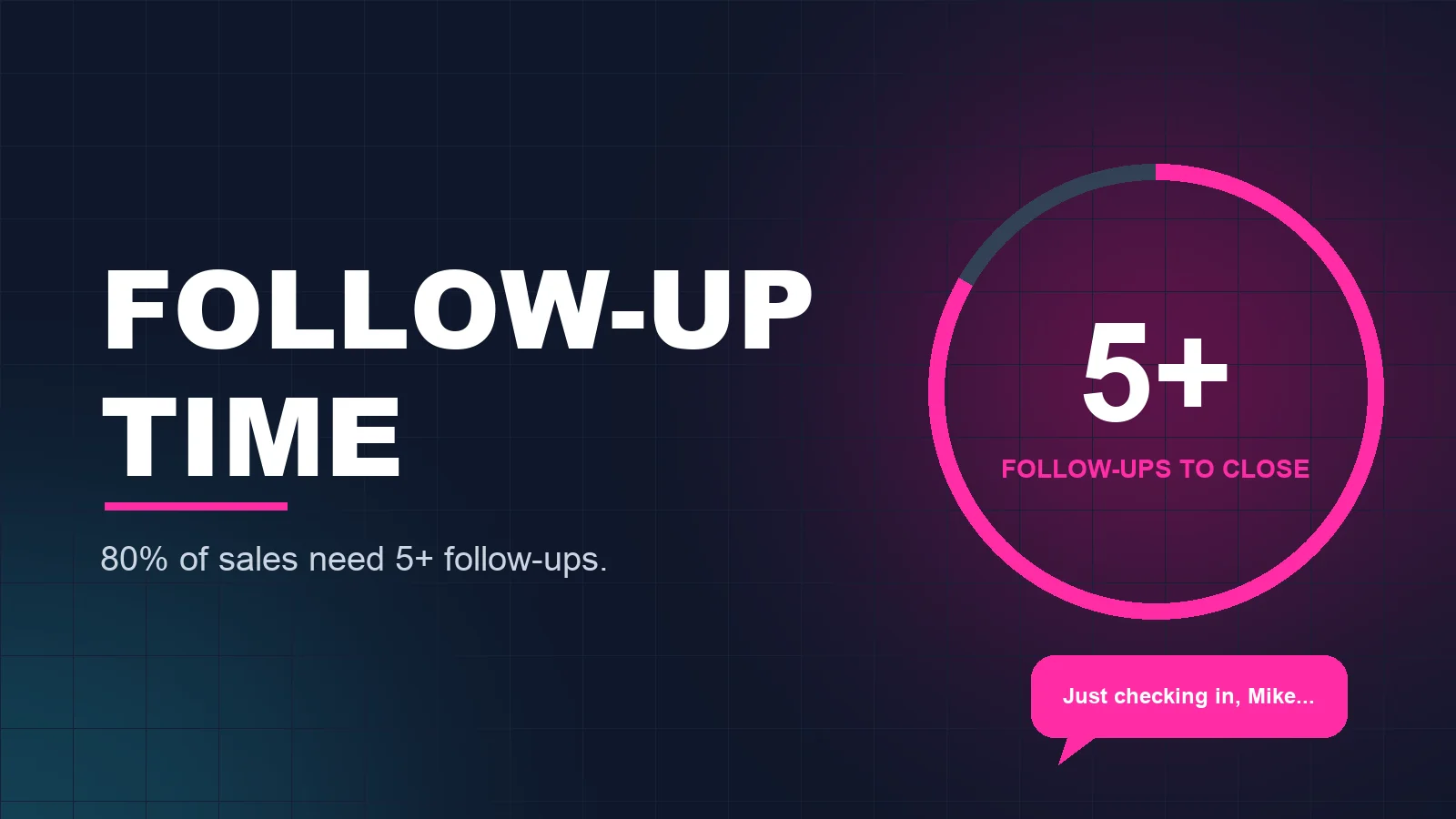
80% of sales need five or more follow-ups. Most reps stop after two. That gap, not a lack of leads or a lack of talent, is where most pipelines quietly leak.
The usual fix is to hire more reps. It rarely works. More people means more cost and more ramp time, and the new hires quit after two attempts too. This guide shows how to shorten lead follow-up time and stay persistent for as long as it takes, using the team you already have.
What Is Lead Follow-Up Time?
Lead follow-up time is how quickly and how consistently your team reaches a lead after they show interest. It has three parts:
- First response time. How long until the lead hears from you the first time. This is your speed to lead.
- Gap between touches. How long a lead waits between your first, second, and fifth attempts.
- Persistence window. How many attempts you make, and over how many days, before a lead is moved to long-term nurture.
Most teams only measure the first part, if they measure anything at all. But a fast first call that goes to voicemail, followed by silence for three days, is still slow follow-up. Buyers judge you on the whole experience.
Why Hiring More Reps Does Not Fix Slow Follow-Up
Adding headcount feels logical: more reps, more dials, faster follow-up. In practice it runs into the same walls:
- Reps still work shifts. Leads that arrive at 9 p.m. or on Sunday still wait until someone logs in.
- Reps still quit early. Following up five, six, seven times is tedious. Most people stop after two, no matter how many of them you hire.
- Reps still lead with calls. Only 19% of people answer unknown numbers, so more dials mostly means more voicemails.
- Reps cost more than the problem. Top reps already burn 10–15 hours a week chasing leads who never answer. Hiring more people to chase more ghosts does not change the math.
The bottleneck is not effort. It is that follow-up is repetitive, time-sensitive work, and that is exactly the kind of work software does better than people.
What Slows Down Lead Follow-Up?
Manual lead handling
Leads land in a CRM or inbox and wait for someone to notice, claim, and work them. Every manual step adds minutes or hours.
Disconnected systems
The form, CRM, phone system, and calendar live in separate tools. Reps copy details between them, and follow-up tasks slip through the cracks.
No written cadence
If the follow-up plan lives in each rep's head, it varies by rep, by day, and by mood. Some leads get six touches. Most get one or two.
The wrong first channel
A cadence built on phone calls starts with a channel most people ignore. 60% of leads prefer to be engaged by text first.
Qualifying by phone
When the only way to learn whether a lead is a fit is a live call, every unanswered call delays qualification, and every qualified lead waits in line behind unqualified ones.
How to Improve Lead Follow-Up Time: 8 Steps
1. Automate the first touch
The first response should fire the moment the lead is created: a short, personal text that uses their name, references what they asked for, and asks one easy question. No human can do that 24/7. Software can do it every time.
2. Write down your cadence
Decide in advance how many touches, on which channels, at what intervals, and when to stop. Here is a starting point many teams adapt:
| Touch | When | Channel | Goal |
|---|---|---|---|
| 1 | Seconds after the lead comes in | SMS | Personal intro, answer their question, ask one qualifying question |
| 2 | If no reply, a few hours later | SMS | Short, helpful nudge with a reason to reply |
| 3 | Day 1–2 | Call, then voicemail + text if missed | Reach the lead live; the text gives them an easy way back |
| 4 | Day 3–4 | SMS | New angle: a useful detail, a question, or a time slot |
| 5 | Day 5–7 | SMS with booking link | Make the next step one tap |
| 6+ | Weekly, then monthly | SMS / voicemail (opted-in only) | Long-term nurture until the lead is ready, opts out, or goes quiet for good |
The exact timing matters less than two rules: every lead gets the full sequence, and the sequence stops immediately when the lead replies, books, or opts out.
3. Lead with SMS, not the dialer
A text can be read and answered on the lead's schedule. A call cannot. Starting with SMS turns follow-up from "catch them live" into "start a conversation," and the call happens when the lead is ready. See Is Cold Calling Dead? for the full case.
4. Qualify inside the conversation
Use the text thread to confirm timeline, need, and fit before a rep gets involved. Qualified leads move straight to booking. Everyone else stays in nurture without taking up rep time. More in How AI Qualifies Leads.
5. Make the next step instant
When a lead says yes, send a booking link with real availability, or bridge them to a rep on a live call transfer right away. Every "let me check with the team and get back to you" adds another follow-up you should not need.
6. Cover nights and weekends
Consumer leads do not keep office hours. Automated follow-up means a lead who fills out a form at 10 p.m. gets a response at 10 p.m., not at 9 a.m. the next day. The rep picks up a warm conversation in the morning, not a cold lead.
7. Respect consent, quiet hours, and opt-outs
Persistence only works when it is welcome. Follow up with opted-in leads only, honor opt-out replies instantly, and avoid texting at odd hours. Our SMS & voice compliance guide covers TCPA, consent, and 10DLC in plain English.
8. Measure the whole sequence
Track more than first response time. The metrics that matter:
- Median first response time, by lead source and hour of day
- Contact rate: the share of leads you actually have a conversation with
- Touches per lead before contact, and before the lead goes to nurture
- Reply-to-booked rate: how many conversations become appointments
- Opt-out rate per touch, to keep persistence from tipping into annoyance
Manual vs. Automated Lead Follow-Up
| Manual follow-up | Automated follow-up | |
|---|---|---|
| First touch | When a rep gets to it | Seconds after the lead comes in |
| Touches per lead | Usually 1–2 | 5+ on a set cadence |
| Nights & weekends | Leads wait | Covered automatically |
| Consistency | Varies by rep and day | Every lead gets the same sequence |
| Rep time | Spent chasing | Spent on leads who replied |
| Scaling | Hire more reps | Same system handles more leads |
How Conversta Improves Lead Follow-Up Time
Conversta runs the follow-up sequence for you, so your reps only talk to leads who are ready:
- Instant first text, sent within seconds of the lead coming in, day or night.
- Two-way AI conversation that answers questions and qualifies the lead.
- Automatic multichannel follow-up across SMS, voicemail, callbacks, and reschedule links, for as long as it takes.
- Booking and live call connection, so a ready lead goes straight to a calendar slot or a rep.
- Long-term nurture for leads who are not ready yet, with opt-outs honored automatically.
Teams using Conversta see up to a 9× contact rate and 2.4× more appointments, with setup in under 10 minutes.
Frequently Asked Questions
How many times should you follow up with a lead?
At least five times. 80% of sales need five or more follow-ups, and most reps stop after two. Keep going on a set cadence until the lead replies, books, or opts out, then move quiet leads into long-term nurture.
What is a good lead follow-up time?
The first response should come within seconds, and no later than five minutes. After that, space touches out over the first week, then move to a slower nurture rhythm.
Should follow-up be by text or phone?
Start with text. Only 19% of people answer unknown numbers, while 60% of leads prefer SMS. Use calls once the lead has replied or asked to talk.
Can you automate lead follow-up without sounding robotic?
Yes. Short, personal messages that reference what the lead asked for, and a real two-way conversation when they reply, feel like good service rather than a script.
Final Thoughts
Slow follow-up is not a people problem, so more people will not fix it. Write the cadence down, lead with text, let automation run it every time, and stop the moment the lead responds. Your reps get their time back, and every lead you paid for gets the five-plus touches it takes to close.
See it work on your own leads. Start your live demo — no credit card, setup in under 10 minutes.